Gediminas Tower to Bernardine Gardens, Vilnius (Sophie Durbin, 2025)
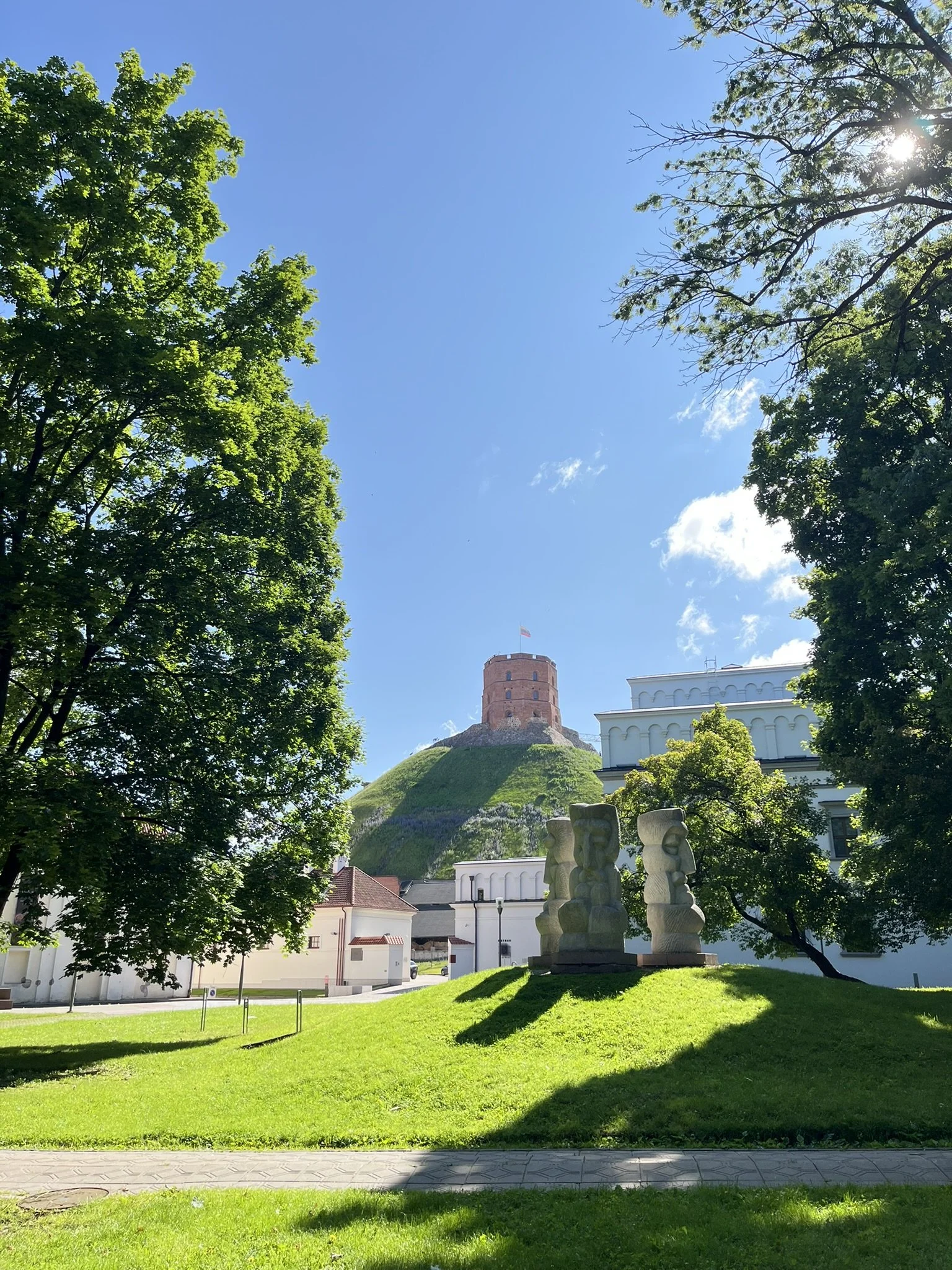
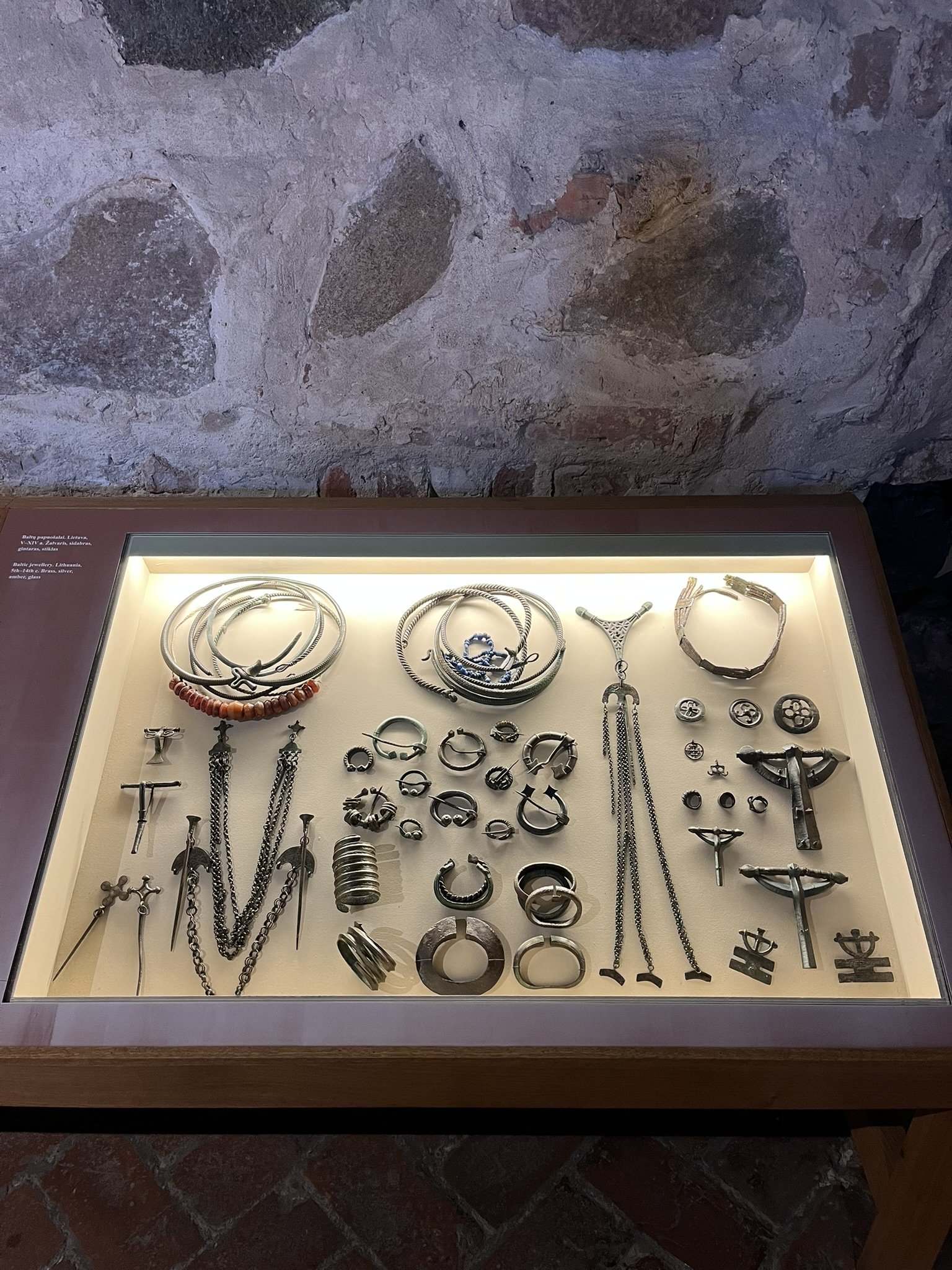
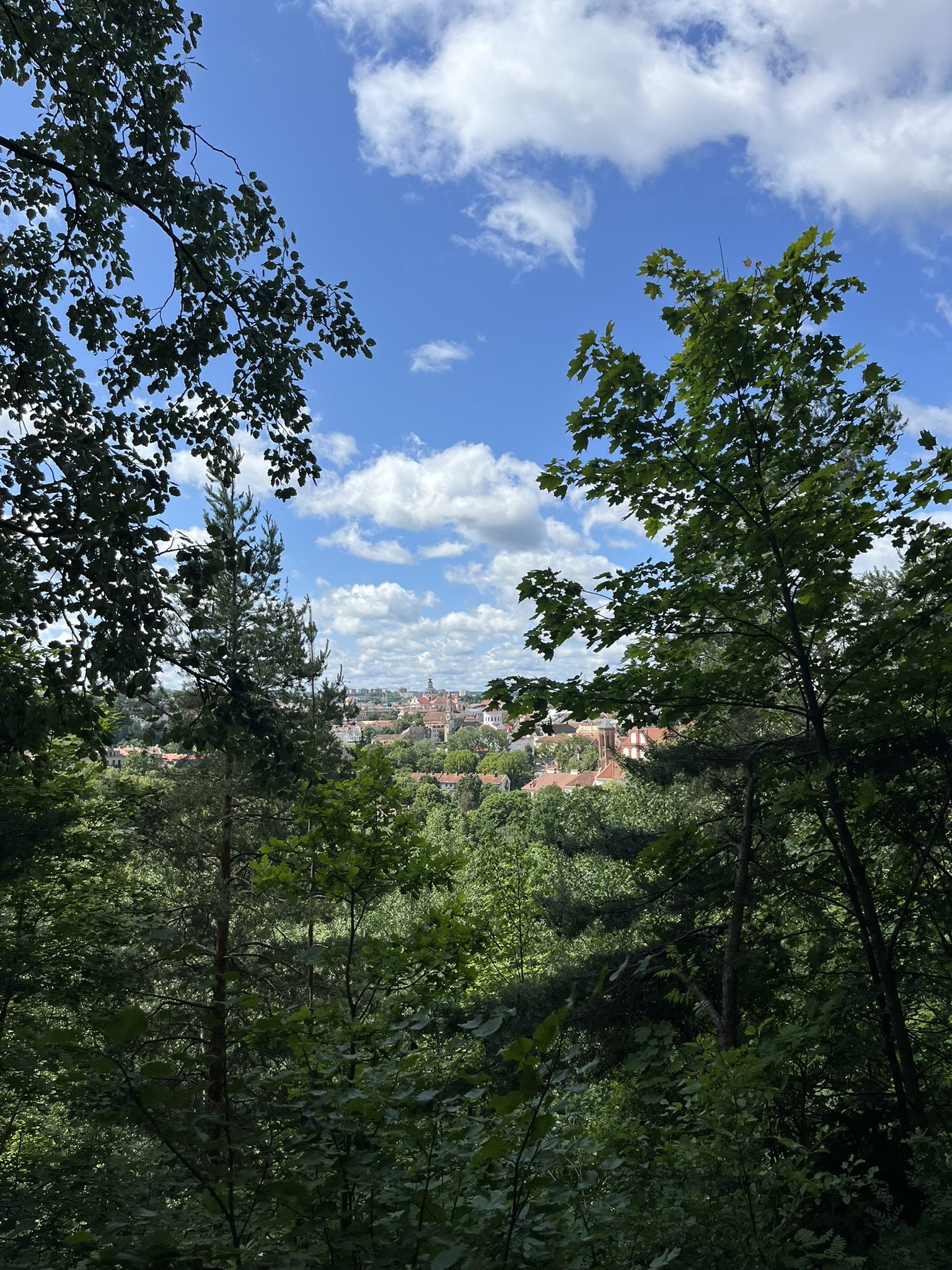
This walk began at the base of Gediminas Tower, first established in the 13th century, where I hopped in a funicular and rode to the top. A group of friendly tourists from the Philippines asked where I was from, and if I spoke Lithuanian. I said I didn’t, but I found the language beautiful.
I lingered in the tower for awhile, attempting to photograph the best picture of the old town of Vilnius, which is distinguished by its vibrant red roofs.
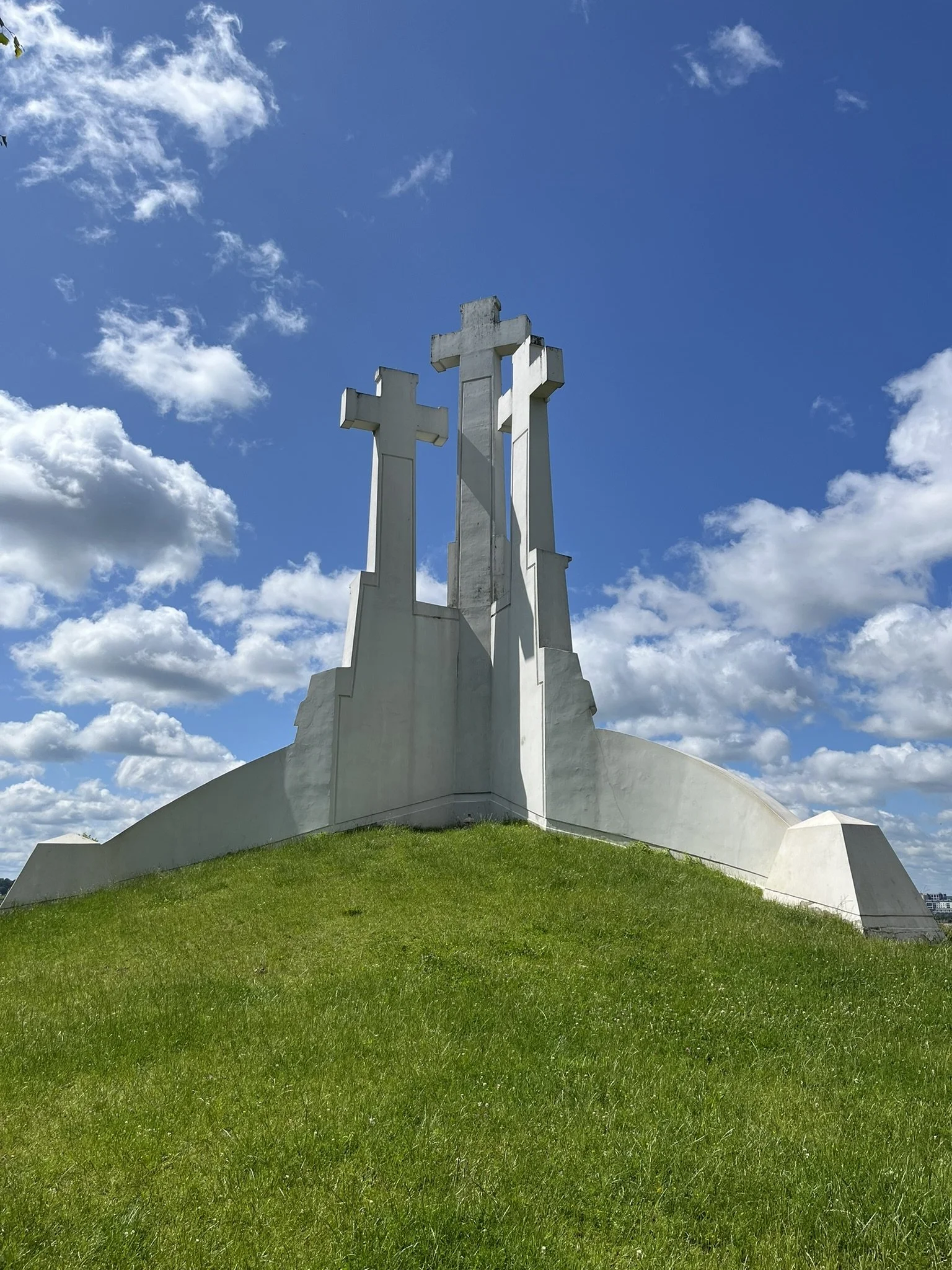
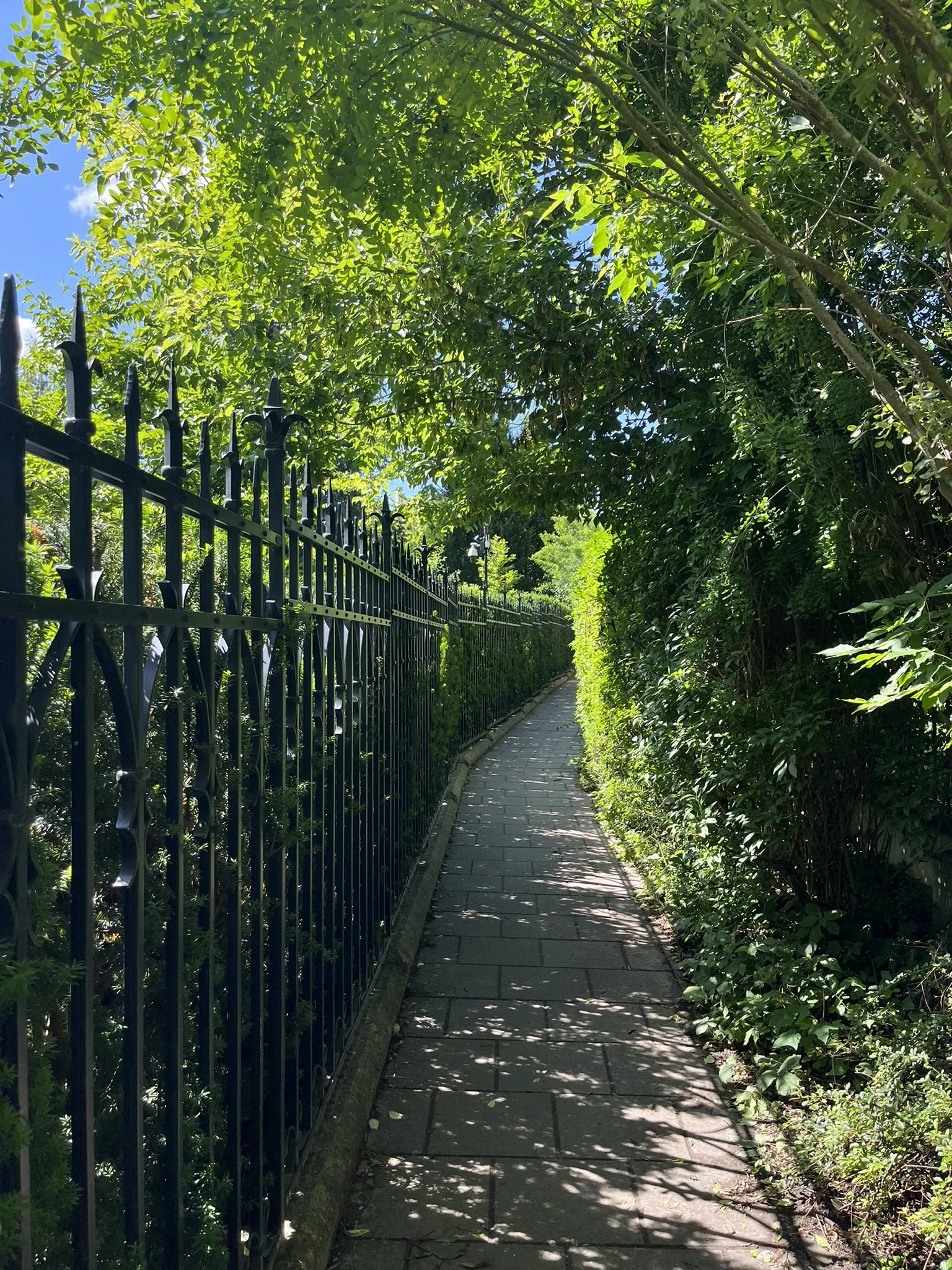
I trekked down from the tower via a winding and steep series of stairs, which led me to the Bernardine Garden. Once a sacred grove, these gardens are close to the Hill of Three Crosses, where legend has it that local pagans martyred Christian missionaries in the 14th century. Lithuania was the last country in Europe to Christianize; its pagan roots are still palpable and cherished.
My great-grandmother’s family came to the United States from Lithuania in the late 1800s. They were Jewish, which at the time set them apart almost entirely from the Lithuanian population and any pagan past that I find so enchanting now. My family members that did not leave then were almost entirely killed in the Holocaust several decades later. I learned on my visit in June 2025 that the Lithuanians themselves were responsible for carrying out most of these murders under Nazi orders. The killings were impersonal and rapid. Reflecting on this now, I am tempted to draw a parallel to the Franciscan monks beheaded on the hill by the sacred grove hundreds of years before. I have resigned myself to admitting they are not the same.